





Stop one cat from stealing another cat's dinner with an RFID feeder designed for selective feeding.
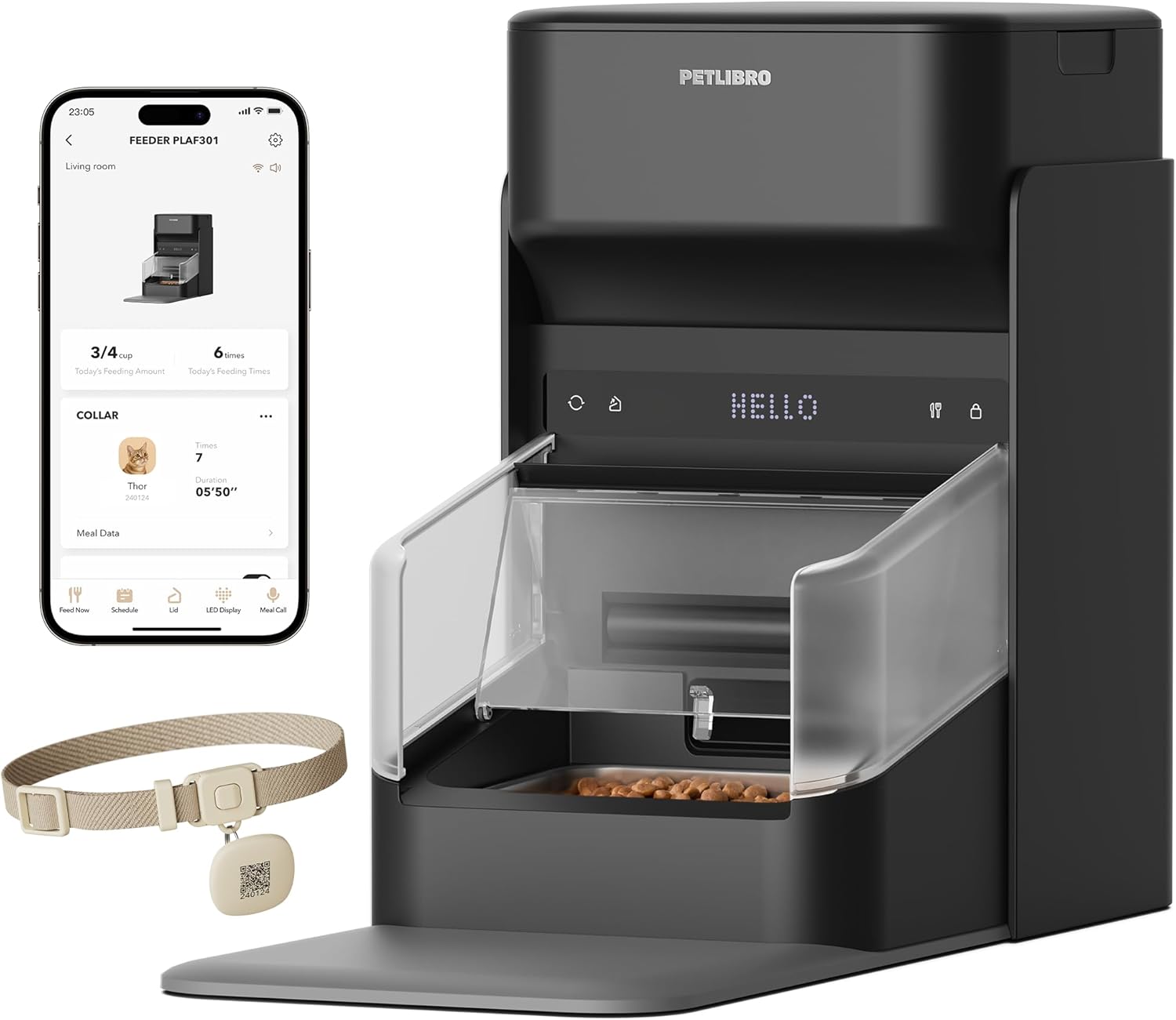
Collar-sensor recognition, diet tracking, and Wi-Fi scheduling built for multi-cat homes.
Every pick below solves the same problem — a hungry cat eating a housemate's dinner — with a different setup depending on your home.
Collar sensor recognizes your cat and serves their exact meal — keeps other pets or pests from stealing food. Wi-Fi programmable with full diet tracking in the app. Sold as a single feeder.
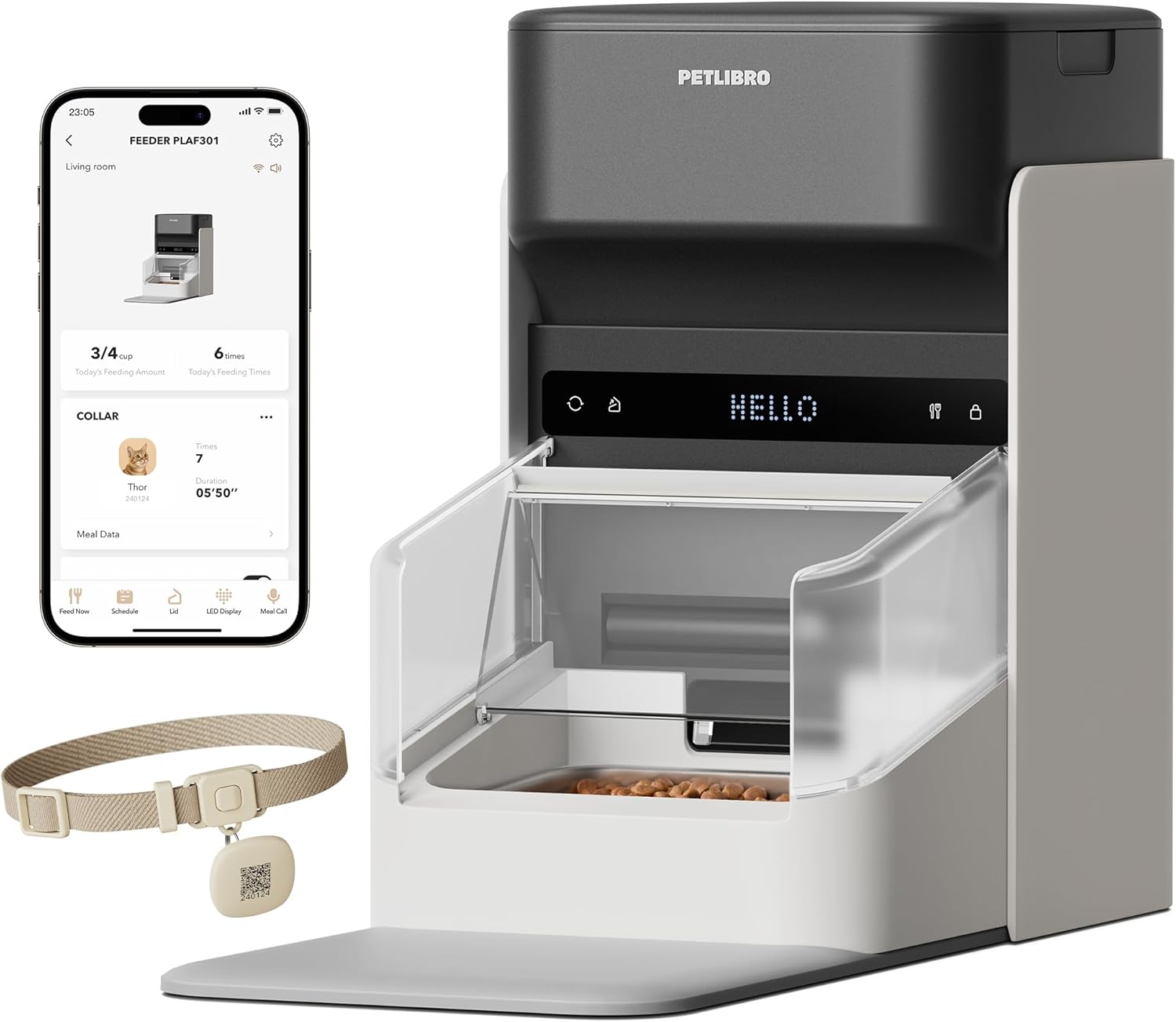
Same collar-tag recognition and diet tracking as our top pick, in a lighter finish, upgraded with 5G & 2.4G dual-band Wi-Fi for a more stable app connection. Sold as a single feeder.
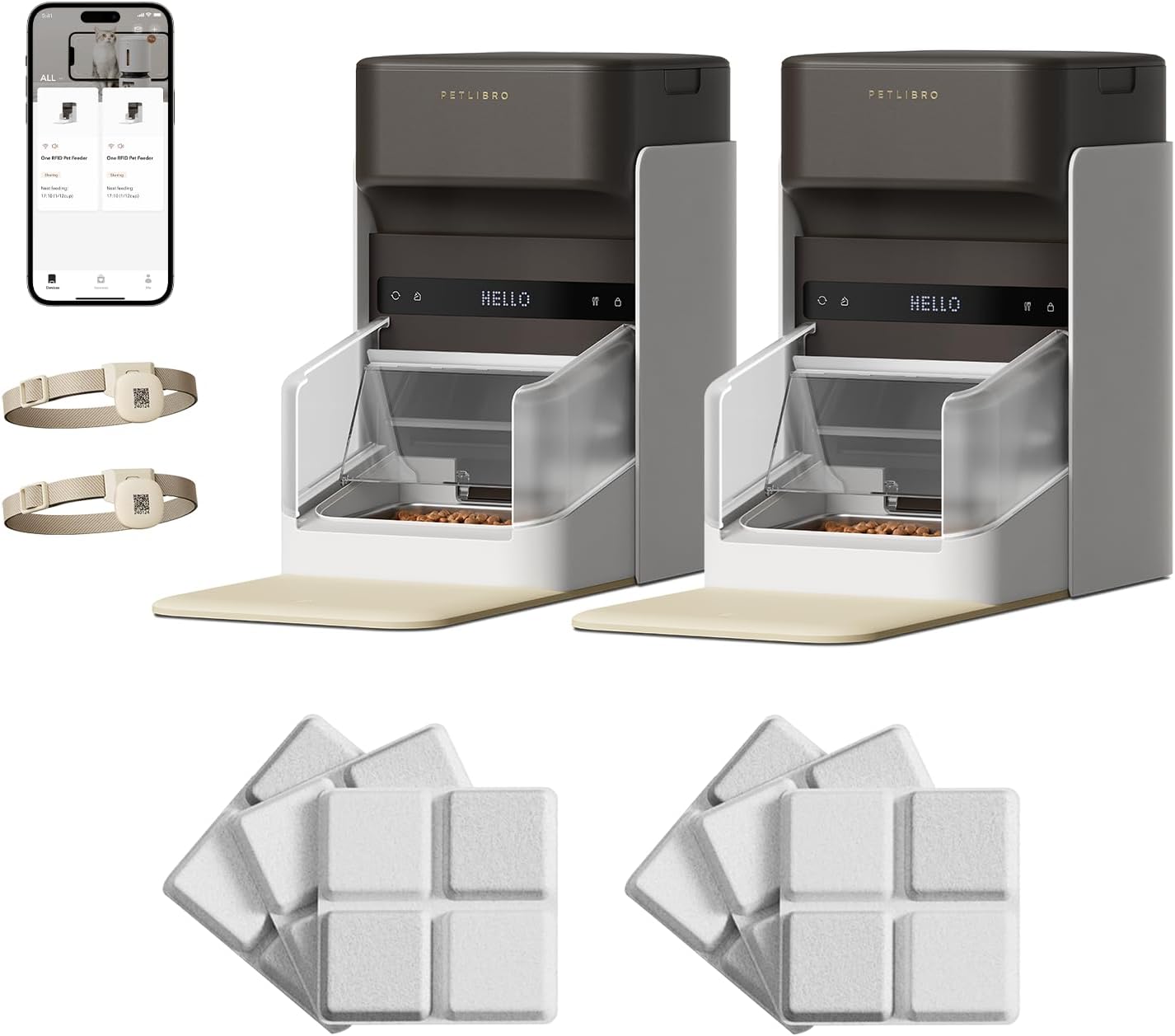
Two full RFID feeders with collar-tag recognition and app scheduling, bundled with six packs of PETLIBRO pet food desiccant to keep kibble fresh. The most practical option if you're outfitting more than one cat at once.
| Feature | Single Unit | Dual-Band Upgrade | 2-Pack Bundle |
|---|---|---|---|
| RFID Collar Recognition | Yes | Yes | Yes |
| App Scheduling | Yes | Yes | Yes |
| Wi-Fi | Standard | 5G & 2.4G Dual-Band | 5G Wi-Fi |
| Feeders Included | 1 | 1 | 2 |
| Color | Black | White | Brown |
| Extras | — | — | 6 packs desiccant |
| Best For | One cat needing portion control | Crowded/weak Wi-Fi homes | Multi-cat households |
Each cat wears a small tag on their collar. When they approach, the feeder reads the tag and only opens if it matches that cat's assigned meal — so a greedy housemate can't finish someone else's portion.
The schedule and RFID recognition run locally on the feeder itself, so feeding continues on time even if Wi-Fi drops — you'll just lose remote app access until it reconnects.
Look for a removable hopper and bowl — all three picks above have easy-access components, which matters more than any app feature after month one.
If you have two or more cats that each need their own recognized meal, the 2-pack bundle works out cheaper per feeder than buying two single units separately, and it throws in desiccant packs to keep food fresh.
Yes — the app lets you set how many meals happen per day and how much food is dispensed at each one. Because RFID recognition ties a meal to a specific cat's tag, you can give a cat on a diet a smaller portion than a housemate who needs more, without them accidentally eating each other's food.
These are auger-style dispensers built for dry kibble only — wet or semi-moist food isn't compatible and will jam the mechanism. Jams with dry food are uncommon but most likely with unusually large or irregular kibble pieces, or if humidity makes the food clump. Keeping kibble dry and consistent in size is the best way to avoid it.
They plug into a standard outlet as their main power source. Like most PETLIBRO RFID models, they also have a battery backup compartment (batteries sold separately) so scheduled feedings and collar recognition can keep working through a short power outage — though the app connection will still be down until Wi-Fi and power are both back.
The app covers meal scheduling, portion sizing, and diet tracking so you can see how much each cat has actually eaten. The white dual-band pick adds more reliable Wi-Fi for homes where the router is far from the feeder. None of the three models reviewed here include a camera or two-way audio — if that matters to you, that's a different PETLIBRO line to look for.
The recognition only matters if your cats eat scheduled meals rather than grazing from a bowl that's always full — a feeder can't stop grazing on food that's already out. Your cat also needs to keep wearing their RFID tag; if a collar-shy cat slips it off, the feeder won't be able to tell them apart from a housemate.
These three are marketed and sized for cats. A small dog could technically wear an RFID tag and use one, but the hopper and portion sizes are built around typical cat meal amounts, so it likely won't hold enough for a dog's full daily food. Where it can help is keeping a dog out of the cat's bowl in a mixed household — just don't count on it as a dog's primary feeder without checking capacity against their actual diet.
Each pet gets their own RFID tag, and the feeder simply won't open for anyone else's — that's what makes the 2-pack bundle (pick #3) work for multi-cat households, since you get two independently scheduled feeders instead of one trying to serve everyone. Place feeders far enough apart that a pushy pet can't crowd another one out, and make sure every pet actually keeps their tag on.
Learn more: How to Stop One Cat From Stealing Another Cat's Food