
If you've ever watched one cat finish their own bowl and then march straight over to a housemate's dinner, you're not imagining things — food-stealing is one of the most common complaints in multi-cat households. It's rarely about hunger. It's about opportunity, instinct, and, sometimes, plain old confidence.
Why Do Cats Steal Each Other's Food?
Cats are naturally solitary hunters, and even indoor cats that get along fine can still compete over food resources. A few common reasons one cat ends up eating another's meal:
- Faster eaters finish first. A quick eater simply moves on to whatever's left in the next bowl.
- Confidence, not hunger. A more dominant or food-motivated cat will often keep eating just because they can, regardless of whether they're actually still hungry.
- Bowls placed too close together. When feeding stations aren't clearly separated, it's easy for one cat to drift into another's space mid-meal.
- Different diets or portion sizes. If one cat is on a smaller or prescription portion, a housemate finishing their own food and moving on to the "better" bowl becomes a recurring problem.

The Problems Food-Stealing Causes in Multi-Cat Homes
Beyond the obvious — one cat going hungry while another overeats — this pattern can quietly cause bigger issues over time. A cat that's consistently under-fed may lose weight or become more anxious around mealtimes, while the cat doing the stealing can end up overweight, which carries its own long-term health risks. If either cat is on a special or prescription diet, food-stealing can undermine the whole reason that diet was prescribed in the first place. And in some households, mealtime competition can spill over into general tension between cats, even outside of feeding time.
Start Simple: Separate Feeding Areas
Before reaching for any gadget, the first thing worth trying is simply separating where and how each cat eats. That can mean:
- Feeding cats in different rooms, or at opposite ends of the same room
- Using raised feeding stations for one cat so a faster eater can't just wander over
- Feeding at the same time each day so no cat associates "waiting" with getting less
- Supervising mealtimes for a week or two to see exactly how the dynamic plays out
For some households, this alone solves the problem. For others — especially homes with three or more cats, awkward layouts, or cats on strict diets — physical separation isn't always practical to maintain every single day.
What "Selective Access" or RFID Feeding Actually Means
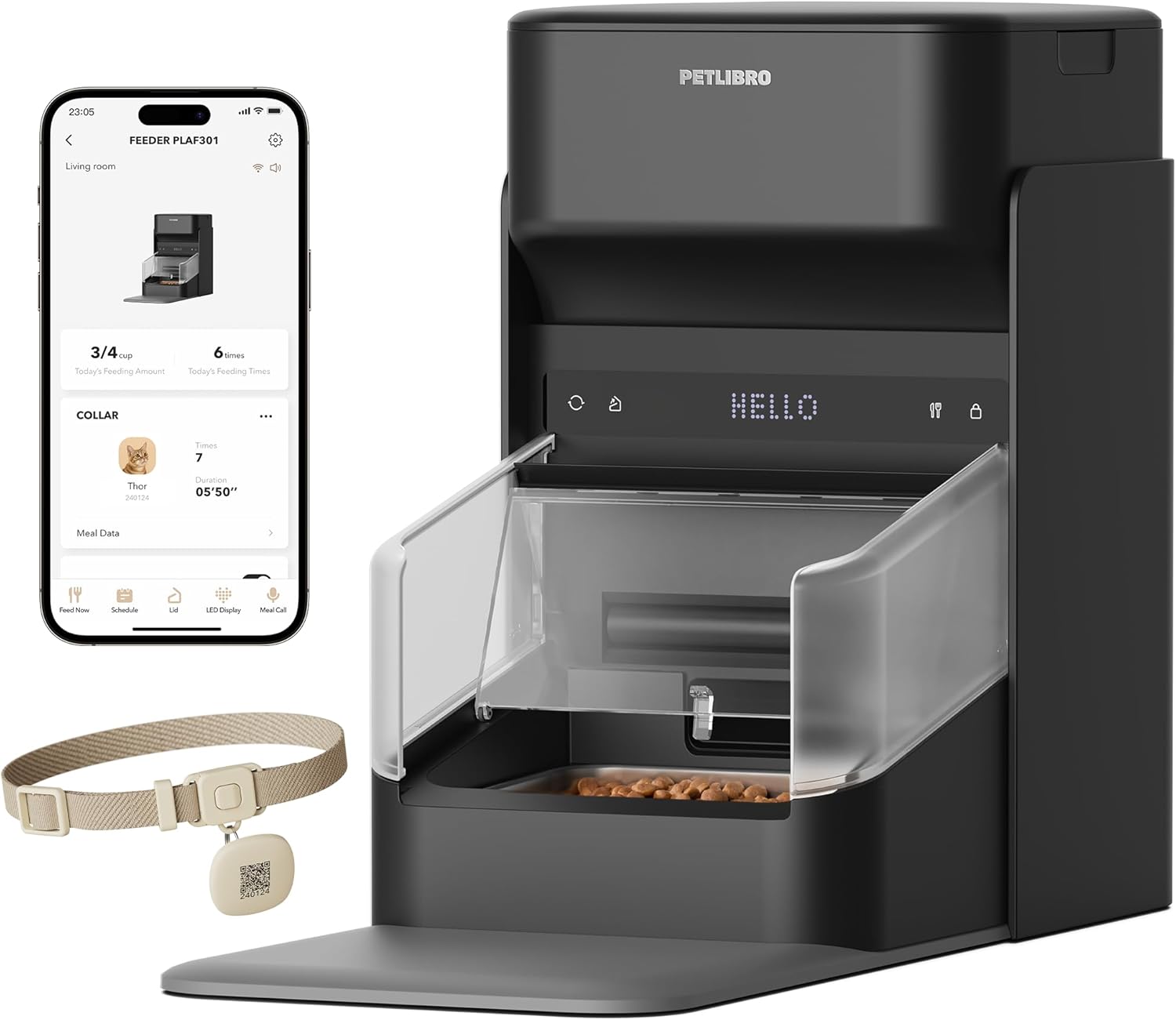
This is where selective-access feeders come in. In plain terms, an RFID pet feeder reads a small tag on your cat's collar (similar to the chip technology used for pet microchips, but external and battery-free) and only opens for the cat whose tag matches that feeder's assigned profile. Every other cat — or a persistent housemate — simply can't trigger it open.
It's a straightforward idea: instead of trying to manage timing and supervision yourself, the feeder handles the "who gets to eat here" decision automatically, every single time, without you needing to be in the room.
How RFID/Microchip Feeders Help
In addition to blocking food theft outright, most RFID feeders also let you schedule meals and track portions through a companion app — useful if you're managing a diet plan or just want visibility into whether a cat is actually eating on schedule. If you're comparing specific models, we've put together our full RFID cat feeder comparison, covering features, Wi-Fi reliability, and what to expect from a couple of different PETLIBRO configurations.
What to Consider Before Buying One
- Collar tolerance. The system only works if your cat reliably wears their tag — a collar-shy cat may need time to adjust, or a breakaway collar with the tag attached.
- Wi-Fi coverage. App scheduling and notifications rely on a stable connection near wherever the feeder sits; homes with weak Wi-Fi in that spot may want a dual-band model.
- Kibble type. Most auger-style dispensers are built for dry kibble only — check compatibility if your cat eats a different food type.
- Number of cats. A single feeder solves the problem for one cat's meals; multi-cat households often need one feeder per cat that needs protected access.
When an Automatic Feeder Is Worth It
Not every household needs one. If your cats already eat calmly and separately, or if simple bowl placement solves the issue, there's no need to add a gadget to the routine. But if you've tried separating feeding areas and still find one cat losing weight while another gains it, or you're juggling different prescription diets in the same room, a selective-access feeder is generally worth the investment. If you want to see how a few well-reviewed options stack up side by side, our best RFID automatic cat feeders for multiple cats guide breaks down the differences in plain language.